Understanding GERD and Heartburn
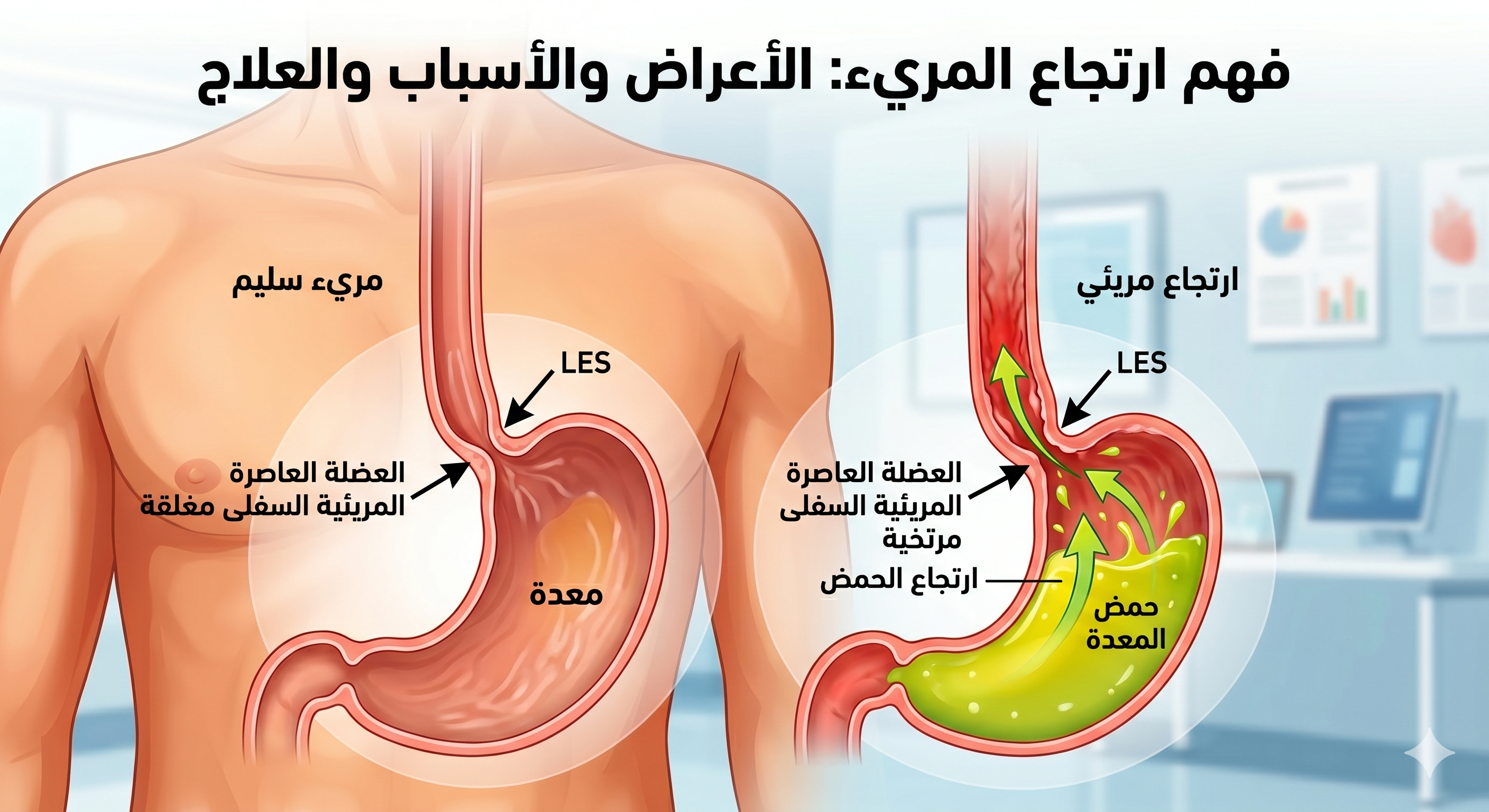
Many people suffer from heartburn, medically known as gastroesophageal reflux disease (GERD). It is a common condition that occurs when stomach acid flows back into the esophagus, causing an uncomfortable burning sensation in the chest.
---
### What is GERD?
GERD is a digestive disorder caused by weakness in the valve between the stomach and the esophagus (the lower esophageal sphincter). This valve is responsible for preventing food and acid from flowing back upward. When it weakens, reflux occurs.
---
### Common Symptoms
You may experience the following symptoms:
* Burning sensation in the chest (especially after eating)
* Sour or bitter taste in the mouth
* Difficulty swallowing
* Chronic dry cough
* Hoarseness, especially in the morning
* Feeling like something is stuck in the throat
---
### Causes of GERD
Several factors can cause or worsen the condition, including:
* Eating fatty or spicy foods
* Excessive consumption of coffee and carbonated drinks
* Smoking
* Obesity
* Eating right before bedtime
* Stress and psychological pressure
---
### When is it serious?
You should consult a doctor if you experience:
* Severe difficulty swallowing
* Unexplained weight loss
* Intense chest pain (may resemble heart pain)
* Daily recurrence of symptoms
---
### Treatment Methods
#### 1. Lifestyle Changes (Most Important)
* Avoid lying down immediately after eating (wait 2–3 hours)
* Lose weight if overweight
* Elevate your head while sleeping
* Reduce coffee, chocolate, and spicy food intake
#### 2. Medications
Some medications can help significantly, such as:
* Omeprazole
* Esomeprazole
* Antacids
(Do not use them without consulting a doctor if symptoms persist.)
#### 3. Surgical Intervention (Severe Cases)
In rare cases, surgery may be required to strengthen the valve between the stomach and esophagus.
---
### Quick Tips to Relieve Symptoms Immediately
* Drink warm water
* Avoid lying down after meals
* Eat smaller, more frequent meals instead of large ones
* Chew food thoroughly
---
### Conclusion
GERD is a common condition, but it can be effectively managed by improving your lifestyle. Ignoring it may lead to complications such as esophagitis or ulcers, so it’s important not to underestimate the symptoms.